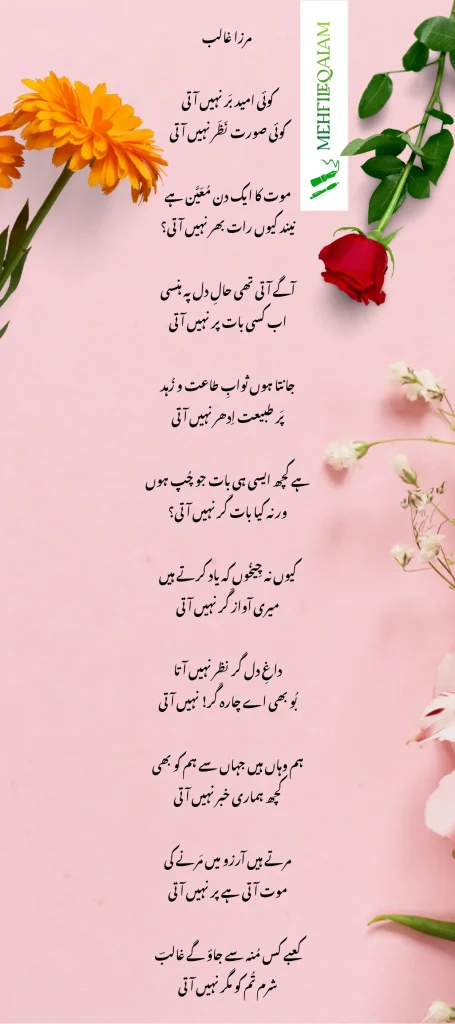
“Koi Umeed Bar Nahi Aati” is arguably one of the most celebrated and profound ghazals by the legendary Urdu poet, Mirza Asadullah Khan Ghalib (1797-1869). Composed during a period of immense personal and historical turmoil, this poem is a timeless expression of existential despair, hopelessness, and self-reflection.
In this masterpiece, Ghalib eloquently captures the human condition: the failure of hopes, the mystery of suffering, the struggle between virtue and human nature, and a profound sense of alienation from oneself and the world. It’s a powerful conversation with the self, ending with the poet’s signature critical and witty final couplet (Maqta).

مکمل متن (اردو)
شاعر: مرزا غالبؔ
کوئی امید بَر نہیں آتی
کوئی صورت نَظَر نہیں آتی
موت کا ایک دن مُعَیَّن ہے
نیند کیوں رات بھر نہیں آتی؟
آگے آتی تھی حالِ دل پہ ہنسی
اب کسی بات پر نہیں آتی
جانتا ہوں ثوابِ طاعت و زُہد
پَر طبیعت اِدھر نہیں آتی
ہے کچھ ایسی ہی بات جو چُپ ہوں
ورنہ کیا بات کَر نہیں آتی؟
کیوں نہ چِیخُوں کہ یاد کرتے ہیں
میری آواز گَر نہیں آتی
داغِ دل گر نظر نہیں آتا
بُو بھی اے چارہ گَر! نہیں آتی
ہم وہاں ہیں جہاں سے ہم کو بھی
کچھ ہماری خبر نہیں آتی
مرتے ہیں آرزو میں مَرنے کی
موت آتی ہے پر نہیں آتی
کعبے کس مُنہ سے جاؤ گے غالبؔ
شرم تُم کو مگر نہیں آتی
مکمل متن (رومن اردو / Roman Urdu)
Shayar (Poet): Mirza Ghalib
Koi umeed bar nahīñ aatī
Koi sūrat naẓar nahīñ aatī
Maut kā ek din mu’ayyan hai
Nīñd kyoñ raat bhar nahīñ aatī?
Aage aatī thī hāl-e-dil pe hañsī
Ab kisī baat par nahīñ aatī
Jāntā hūñ sawāb-e-tā’at o zuhd
Par tabī’at idhar nahīñ aatī
Hai kuchh aisī hī baat jo chup hūñ
Warna kyā baat kar nahīñ aatī?
Kyoñ na chīkhūñ ke yaad karte haiñ
Merī āwāz gar nahīñ aatī
Dāġh-e-dil gar nazar nahīñ aatā
Bū bhī ai chāra-gar! nahīñ aatī
Ham wahāñ haiñ jahāñ se ham ko bhī
Kūchh hamārī khabar nahīñ aatī
Marte hain ārzū meñ marne kī
Maut aatī hai par nahīñ aatī
Ka’abe kis muñh se jāoge Ghalib
Sharm tum ko magar nahīñ aatī
غزل کا مفہوم (Meaning of the Ghazal)
This table provides a verse-by-verse breakdown of Ghalib’s deep philosophical and emotional state in the ghazal.
| Couplet | Meaning / Explanation |
| Koi umeed bar nahīñ aatī, Koi sūrat naẓar nahīñ aatī | No hope seems to be fulfilled (or successful), nor is any solution or way forward visible. |
| Maut kā ek din mu’ayyan hai, Nīñd kyoñ raat bhar nahīñ aatī? | The day of death is already fixed and certain, so why is it that sleep does not come to me all night? |
| Aage aatī thī hāl-e-dil pe hañsī, Ab kisī baat par nahīñ aatī | I used to laugh at the sheer absurdity of my heart’s condition (my plight), but now, I cannot even manage to laugh at anything. |
| Jāntā hūñ sawāb-e-tā’at o zuhd, Par tabī’at idhar nahīñ aatī | I know the rewards of devotion and piety, but my nature or inclination does not lead me towards them. |
| Hai kuchh aisī hī baat jo chup hūñ, Warna kyā baat kar nahīñ aatī? | There must be some deep reason why I am silent, otherwise, is there anything I don’t know how to talk about? |
| Kyoñ na chīkhūñ ke yaad karte haiñ, Merī āwāz gar nahīñ aatī | Why should I not shout out (in pain), when they remember me, even if my voice doesn’t reach them? |
| Dāġh-e-dil gar nazar nahīñ aatā, Bū bhī ai chāra-gar! nahīñ aatī | O healer (doctor)! If the scars of my heart are not visible, can you not even smell the burning or anguish? |
| Ham wahāñ haiñ jahāñ se ham ko bhī, Kūchh hamārī khabar nahīñ aatī | I am at a place (or in a state of mind) from where even I do not get any news of myself (I am utterly lost and unaware of my own condition). |
| Marte hain ārzū meñ marne kī, Maut aatī hai par nahīñ aatī | I am dying in the desire for death itself, Death arrives (as a thought), but it does not come (to take me). |
| Ka’abe kis muñh se jāoge Ghalib, Sharm tum ko magar nahīñ aatī | Ghalib, with what face will you go to the Kaaba (House of God)? You feel no shame for your actions! (A powerful and witty self-criticism). |
خصوصی گرافک ڈاؤن لوڈ کریں
ہم نے اس لازوال غزل کو آپ کے لیے ایک خوبصورت گرافک کی شکل دی ہے جسے آپ سوشل میڈیا پر شیئر کر سکتے ہیں یا اپنے پاس محفوظ رکھ سکتے ہیں۔